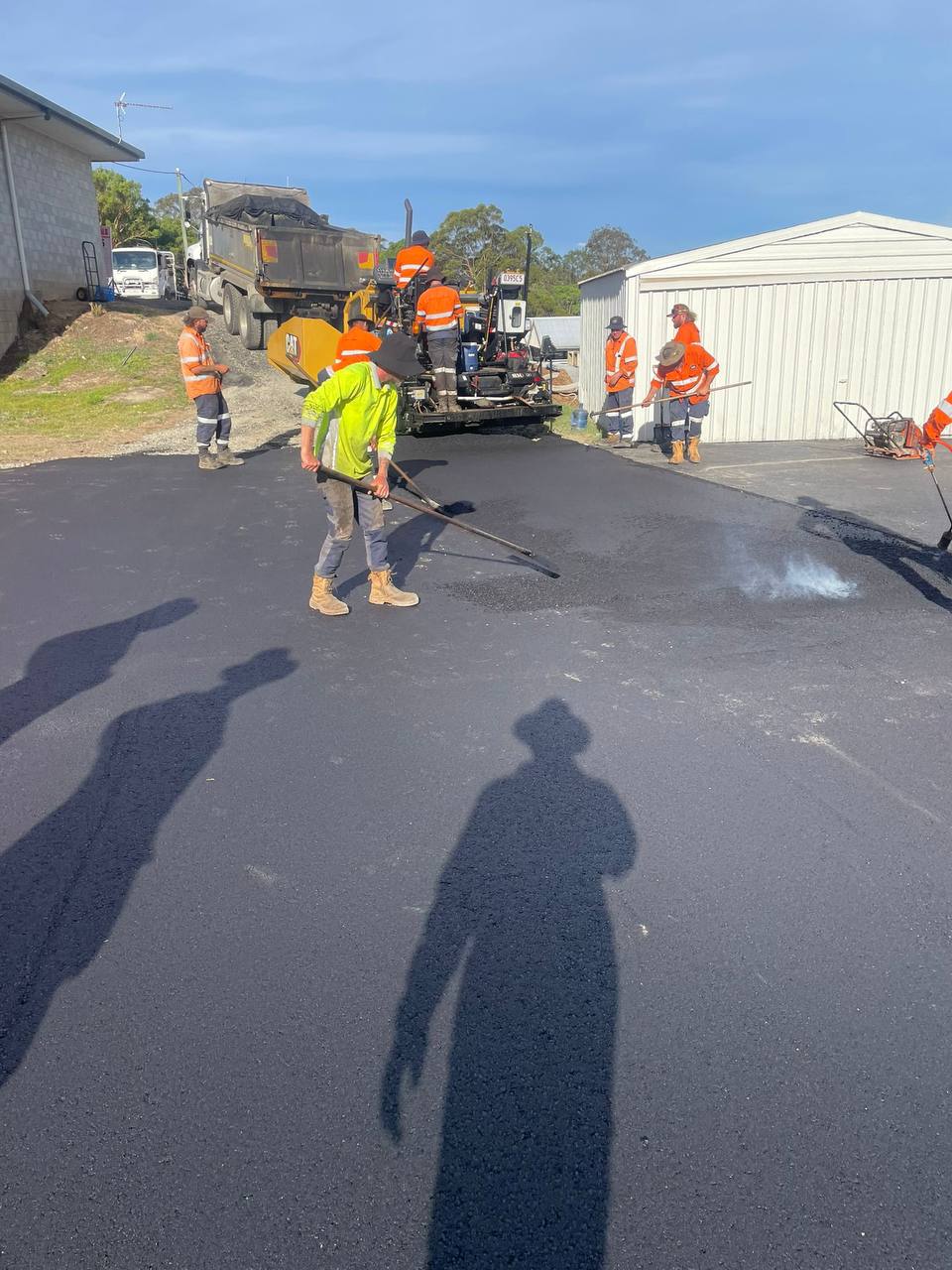
A well-constructed road provides safe, dependable access for vehicles and supports the everyday movement of people, goods and services. Whether serving residential developments, commercial properties or private access routes, a road must be designed and built to withstand regular traffic, changing weather conditions and the demands of its intended use.
For property owners and businesses in Maryborough, QLD, Australia, understanding the key stages of road construction helps explain why proper planning, ground preparation and quality surfacing are essential. A durable road is not created by laying asphalt alone; its long-term performance depends on every layer beneath the finished surface and how effectively the entire project is delivered.
Planning and Assessing the Site
Every successful road construction project begins with a detailed assessment of the site. Before work starts, contractors need to understand the ground conditions, intended traffic levels, road layout and drainage requirements.
The expected use of the road influences its design. A route used mainly by light vehicles may require a different construction specification from one expected to accommodate frequent heavy vehicles. The available space, existing ground levels and connections to surrounding access points must also be considered.
Careful planning helps identify potential challenges before construction begins. It also provides a basis for selecting appropriate materials, determining the required pavement structure and coordinating the different stages of the work.
Ground Preparation and Earthworks
Ground preparation establishes the foundation on which the road will be built. The construction area may need to be cleared, excavated and shaped to achieve the required levels and alignment.
Unsuitable or unstable material may need to be removed or treated before the next stages can proceed. The exposed ground is then prepared and compacted to provide a more stable platform for the road structure.
This stage is particularly important because weaknesses in the underlying ground can affect the finished pavement. If the foundation moves or settles unevenly, the surface may develop cracks, depressions or other defects even when the surfacing materials are of good quality.
Accurate levels are also essential. The road must be shaped to support effective drainage and provide a consistent driving surface without unwanted low spots.
Installing the Sub-Base and Base Layers
Once the ground has been prepared, the supporting pavement layers can be constructed. These layers help distribute vehicle loads and provide a stable foundation for the final road surface.
The sub-base is generally placed over the prepared formation, followed by additional base material where required by the design. Each layer must be suitable for the site conditions and intended traffic, with thickness and material selection determined by the engineering requirements of the project.
Compaction is a critical part of this process. Material that is not compacted adequately may shift under repeated loading, leading to settlement and surface deformation. Consistent placement and compaction help create a firm foundation capable of supporting the finished pavement.
Before surfacing begins, the supporting layers should be checked to confirm that they meet the required levels, condition and construction specification.
Planning Effective Road Drainage
Water management is one of the most important considerations in road construction. When water accumulates on the surface or enters the pavement structure, it can weaken supporting materials and contribute to cracking, potholes and premature deterioration.
Road design should therefore incorporate suitable gradients, drainage channels and other measures appropriate to the site. The aim is to direct rainwater away from the road surface and prevent it from collecting in vulnerable areas.
In Maryborough, QLD, Australia, road construction should account for local rainfall patterns and site-specific drainage conditions. The drainage arrangement must suit the ground, road layout and surrounding land rather than relying on a standard solution for every project.
Effective drainage supports the performance of the pavement and helps reduce the likelihood of recurring surface problems.
Laying and Compacting the Road Surface
The final surfacing layer provides the running surface for vehicles and protects the supporting pavement from direct exposure to traffic and weather. Depending on the project specification, this may involve asphalt or another suitable road surfacing material.
Before laying begins, the underlying layers must be ready to receive the surface. The selected material then needs to be placed evenly and compacted using appropriate equipment and methods.
Consistent laying and compaction help achieve a smooth finish, suitable surface density and reliable performance under traffic. Poor workmanship at this stage can lead to uneven areas, weak sections or early deterioration.
Junctions, edges and connections with existing surfaces also require careful attention. These areas should be finished properly to provide a consistent transition and reduce the risk of water entering vulnerable parts of the pavement.
Quality Checks and Final Inspection
Quality control should take place throughout road construction, not just when the project is complete. Checking ground preparation, pavement thickness, compaction, drainage and surface levels helps identify problems while they can still be addressed efficiently.
The finished road should be assessed against the project specification to confirm that the surface is consistent and the construction meets the intended requirements. Any defects identified during inspection should be investigated and corrected before the road is put into normal use.
Following the appropriate completion and curing requirements for the selected materials is also important. Opening a new surface to traffic too early may affect its finish and performance.
Maintaining a Road After Construction
Even a well-built road requires maintenance to preserve its condition. Regular inspections can help identify early signs of cracking, potholes, drainage blockages and surface wear before these issues become more extensive.
Small defects should be assessed promptly, particularly where water may enter the pavement. Keeping drainage systems clear and ensuring that damaged areas are repaired appropriately can help extend the useful life of the road.
Maintenance requirements vary according to traffic levels, construction materials, weather exposure and the quality of the original installation. A suitable maintenance approach should reflect the actual condition and use of the road.
Professional Road Construction in Maryborough, QLD, Australia
Building a reliable road requires careful coordination from the initial site assessment through to the final surface inspection. Each stage contributes to the strength, drainage performance and durability of the completed pavement.
Maryborough Surfacing Solutions supports road construction and surfacing requirements in Maryborough, QLD, Australia, with a focus on the preparation and installation needed to achieve a practical, consistent finish. If you are planning a new road or access route, contact Maryborough Surfacing Solutions to discuss your project and arrange a professional assessment.
Conclusion
Durable road construction depends on more than the visible surface. Proper planning, stable ground preparation, correctly constructed pavement layers, effective drainage and quality surfacing all contribute to long-term performance.
For projects in Maryborough, QLD, Australia, giving attention to each construction stage helps reduce avoidable defects and supports a road that can withstand its intended use. With suitable planning and professional workmanship, a well-constructed road can provide reliable access and lasting practical value.
Call us on: 07 4158 7474
Click here to find out more about Maryborough Surfacing Solutions
Click here to complete our contact form and see how we can help with your driveways.